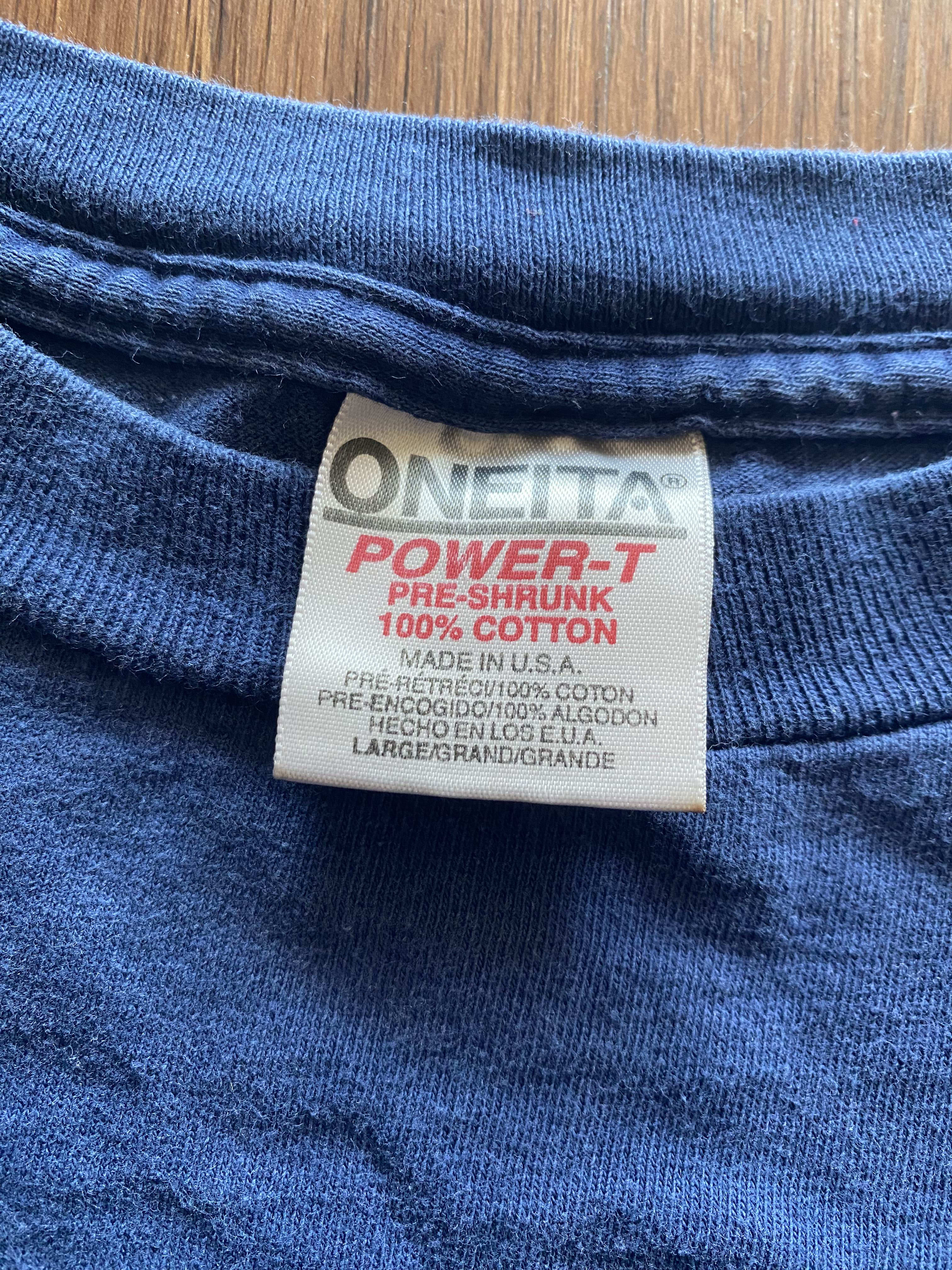
The Andrews SC variant represents Oneita at the height of domestic production. The Power-T was Oneita's flagship blank — the shirt choice for concert merchandise, souvenir tees, and promotional printing throughout the late 80s. At this point, the Andrews plant was operating at full capacity, and "Made in USA" on the neck tag was simply a fact, not a selling point.
The care label is the most reliable dating tool for this variant. When the Andrews, SC address appears — typically on a separate white care label sewn inside the left seam — the shirt is definitively pre-offshore. This information is invisible from the outside and missed by most buyers, which is why Oneita USA variants are frequently misdated even by experienced collectors.
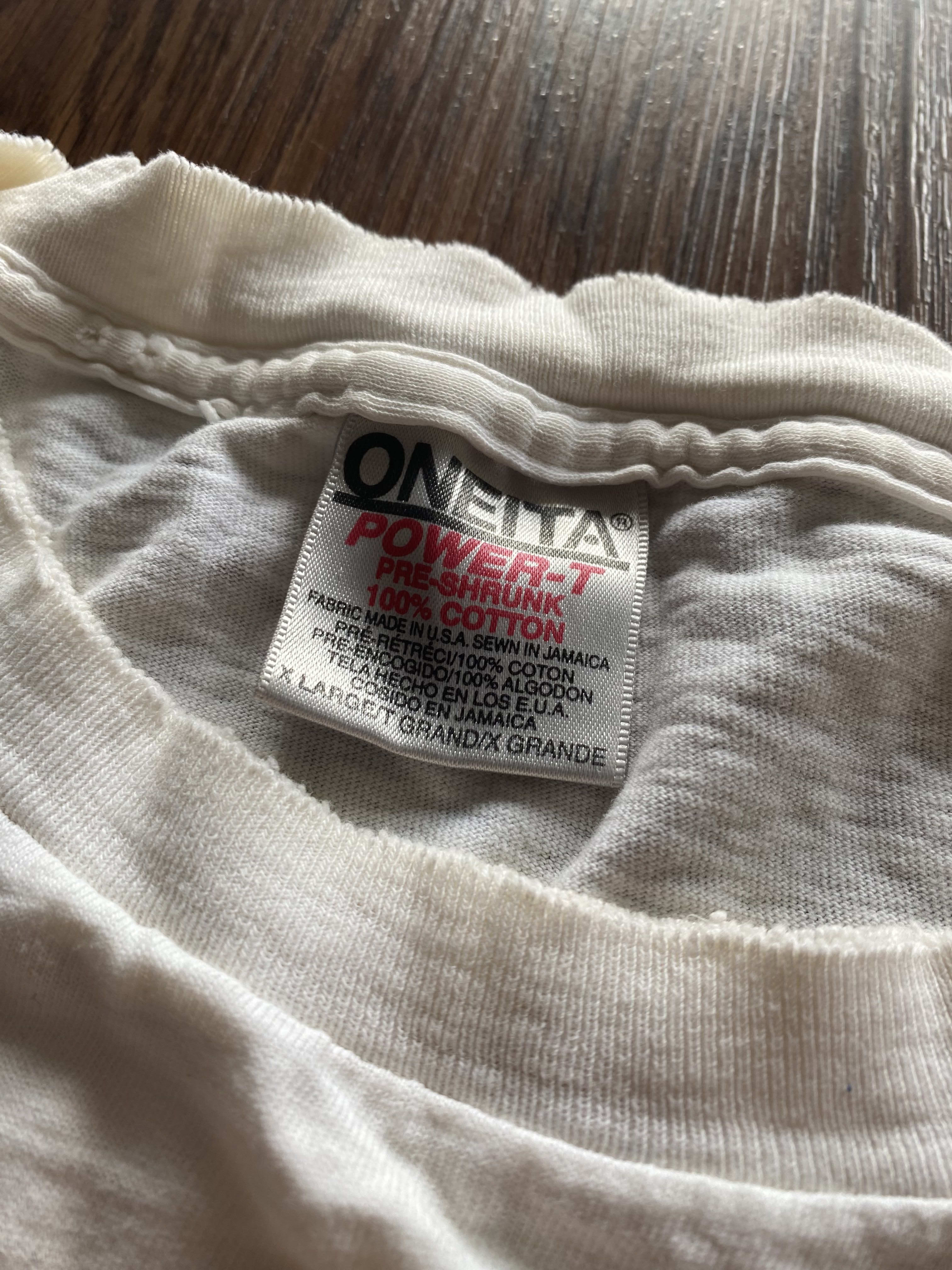
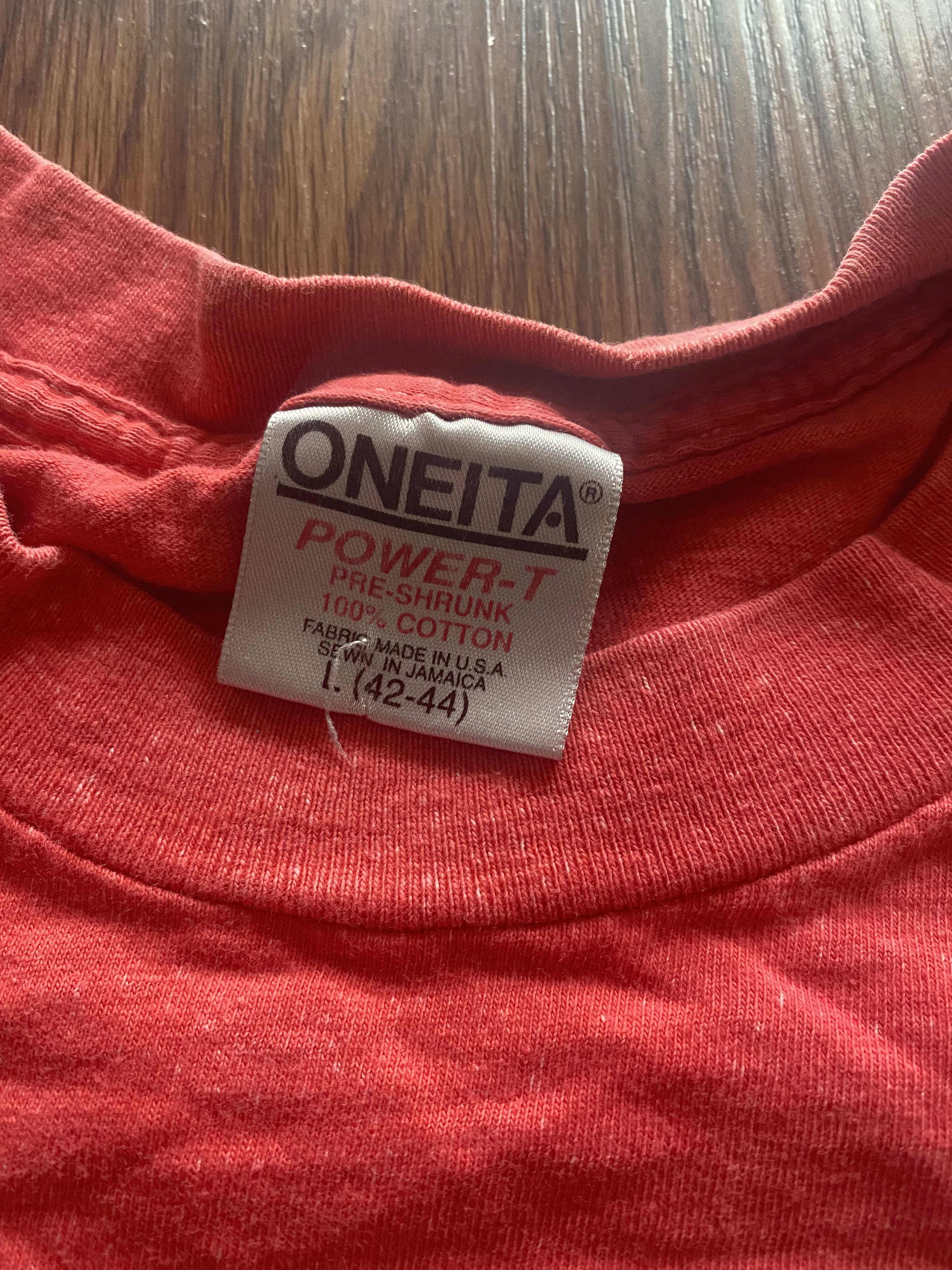
The Jamaica variants are the ones most collectors encounter in the wild. This is the blank underneath a significant portion of mid-90s Grateful Dead official merchandise — the GDM copyright shirts, the Liquid Blue tie-dyes, the summer tour runs. If you own a Dead shirt from 1993 to 1995, there's a reasonable chance it's on a Jamaica Oneita.
The two sub-phrasings matter for precise dating. "Made in USA / Sewn in Jamaica" suggests an early transition period when Oneita was still sourcing domestic fabric and only moving the labor offshore. By the time the "Assembled in Jamaica of U.S.A. Components" phrasing appeared, the process was standardized. Neither variant is more desirable than the other — but they are different, and knowing which one you have narrows the window by two to three years.
Oneita Knitting Mills was founded in Andrews, South Carolina in 1908. For most of the twentieth century it was exactly what it sounds like — a textile mill in a small Southern town, employing local workers to produce the blank t-shirts that would eventually be printed and sold across the country.
By the late 1980s, Oneita's Power-T had become the blank of choice for a significant slice of the American promotional and concert merchandise market. The shirt was known for its weight, its consistent dyeability, and its price point. Tour shirt printers liked it. Souvenir vendors liked it. The blank was ubiquitous without being generic.
What ended the Andrews era wasn't a single decision but an industry-wide pressure that accelerated sharply after 1990. The Caribbean Basin Initiative — a U.S. trade policy designed to encourage manufacturing in Caribbean and Central American nations — made offshore assembly economically irresistible. Oneita moved production to Jamaica in stages, first by keeping fabric domestic while moving assembly, then eventually standardizing the process entirely.
The Andrews, SC plant closed. The jobs left. The tag changed. And from that point on, the Power-T that printers were putting Dead graphics onto was being sewn in Kingston rather than South Carolina. The shirt itself didn't change — the weight, the feel, the print quality were essentially identical. But the tag tells you exactly when the address on the care label stopped being American.