🚧 TeeTracker is in early access — new features shipping weekly. Found a bug or have a suggestion? teetrackerapp@gmail.com
Collection Archive Community Submit a Tee About Marketplace
Founded
1851
Headquarters
Bowling Green, KY
Production Window
Late 80s — Early 90s
In the Archive
5 Entries
01
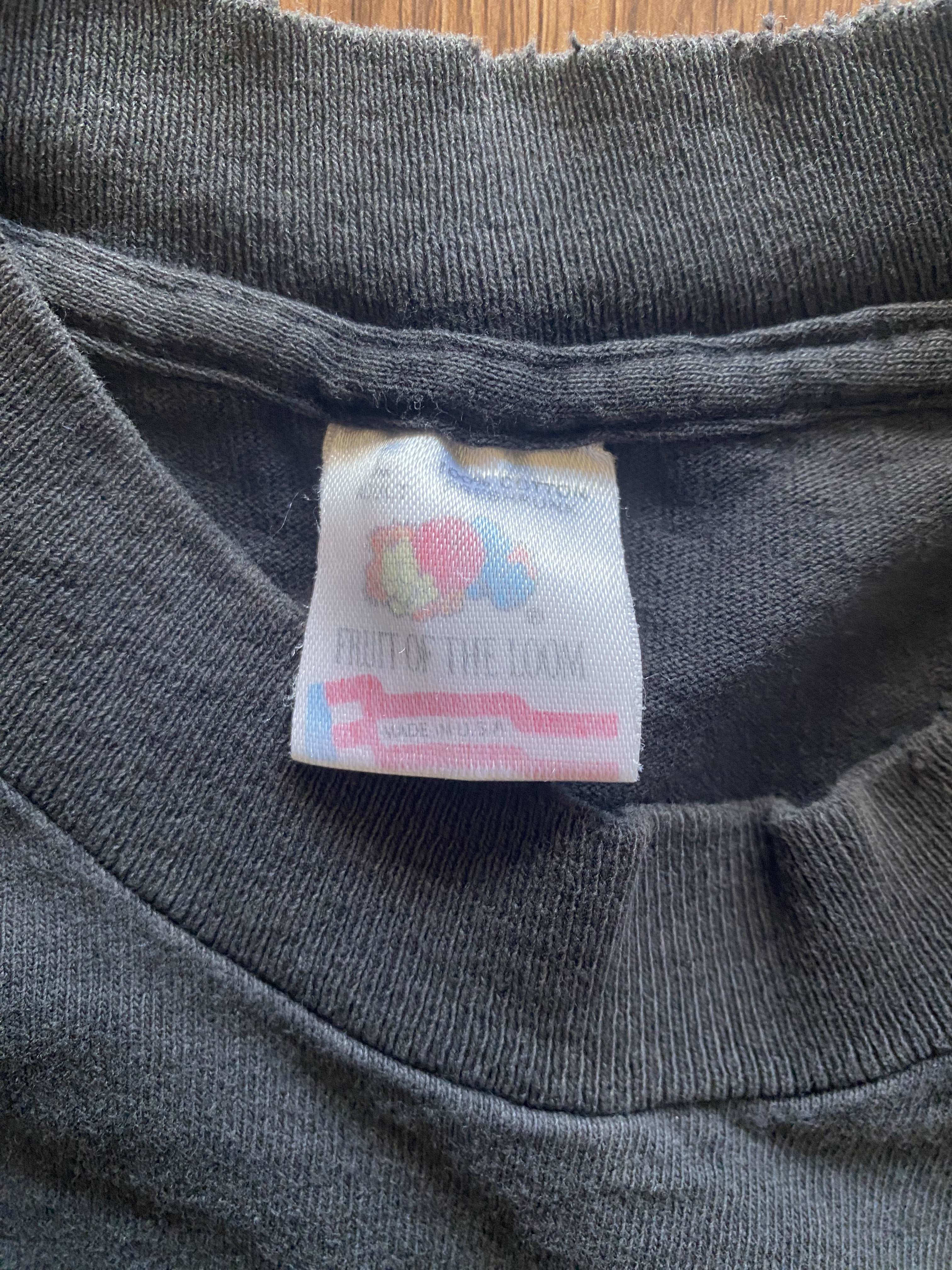
Flag Tag — Late 80s Domestic
Late 80s · Made in USA
Fruit of the Loom flag tag — late 80s domestic
From TT-000026 — Indiana University Arch Print, Late 80s
How to Identify This Variant
Tag Design
American flag graphic integrated into the tag — the "Made in U.S.A." text sits on a red-and-white striped flag banner with blue field. Distinctive and immediately recognizable. No fruit cluster illustration on this variant.
Made In
Made in USA — all flag tag examples are domestic production. The flag itself is the origin declaration.
Era Window
Late 80s — the flag tag design predates the fruit cluster redesign that FTL introduced in the early 90s. If you see the flag tag, you're looking at late 80s or earlier.
Construction
Single stitch — consistent with all domestic FTL production of this period.
Key Tell
The flag is the tell. No other major blank used this tag format. One look and you know exactly what you're holding and roughly when it was made.

The flag tag is one of the most visually distinctive neck labels in vintage collecting — a small illustrated American flag built into the tag itself, the stripes doubling as a "Made in U.S.A." declaration. Fruit of the Loom used this design through the late 80s before switching to the fruit cluster layout that became their signature in the 90s.

The archive example (TT-000026) is an Indiana University arch print from the late 80s — a clean collegiate piece on a domestic blank, the kind of campus bookstore tee that defined the era. The flag tag here functions as a date stamp as much as a brand mark: this shirt was made in America, by American workers, before the offshore pressure became impossible to resist.

02
Fruit Cluster — Early 90s Domestic
Early 90s · Made in USA
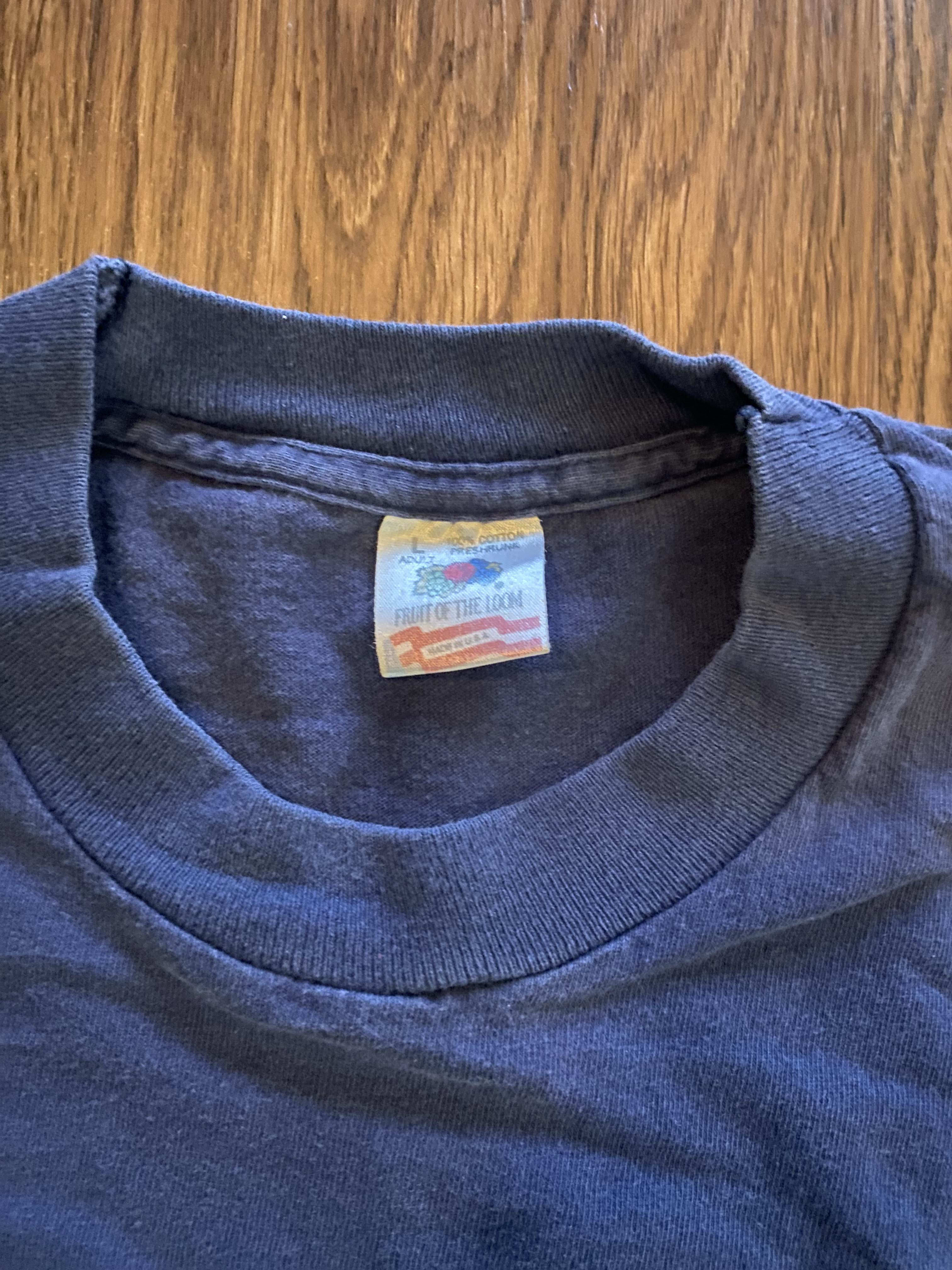
Fruit of the Loom fruit cluster tag — Grateful Dead Bertha early 90s
From TT-000031 — Grateful Dead Bertha, Early 90s
Fruit of the Loom fruit cluster tag — Alaska Wolf early 90s
From TT-000052 — Alaska Wolf Portrait, Early 90s
How to Identify This Variant
Tag Design
Full illustrated fruit cluster — grapes, apples, and assorted fruits in color above "Fruit of the Loom" in serif type. The American flag "Made in U.S.A." banner appears below on domestic examples. This is FTL's most recognizable tag format.
Made In
Made in USA on domestic fruit cluster examples — the flag banner confirms domestic origin. Fruit cluster tags also appear on offshore production, so the flag banner is the key differentiator.
Era Window
Early 90s for domestic fruit cluster examples. The fruit cluster replaced the flag tag as FTL's standard design in the late 80s / very early 90s transition.
Construction
Single stitch on domestic examples — consistent with all USA-made FTL blanks through the early 90s.
Blend Note
Both 100% cotton and 98/2 cotton/other fibers variants appear with the fruit cluster tag. Check the blend line on the tag — it affects print quality and aging characteristics.

The fruit cluster is FTL's canonical tag — the one that appears in most collectors' mental image of a vintage Fruit of the Loom blank. It ran through the late 80s into the mid-90s on domestic production and survived the offshore transition on international examples, which makes the "Made in U.S.A." flag banner the essential detail to check.

Two archive examples carry this tag on important pieces: the Grateful Dead Bertha Skeleton & Roses (TT-000031), a 1990 GDM official piece on a domestic blank, and the Alaska Wolf Portrait souvenir tee (TT-000052), an airbrush-style nature print from the same era. Both are single stitch, both are USA, and both show the fruit cluster at its most typical — colorful, slightly naive illustration, the flag banner proud below.

03
Fruit of the Loom Best — Offshore Sub-Label
Early 90s · Mexico Production
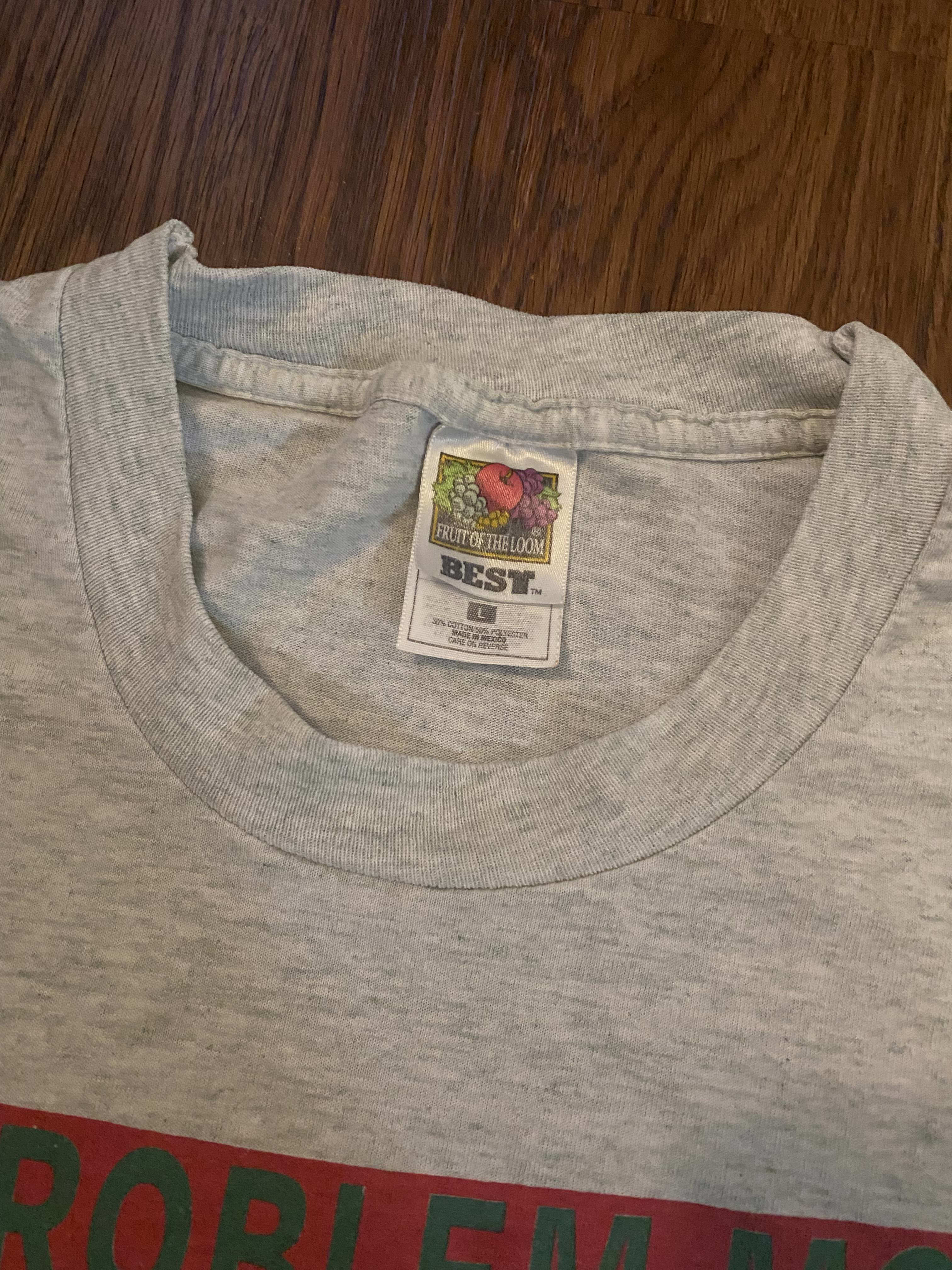
Fruit of the Loom Best sub-label tag — Beavis bootleg Mexico
From TT-000039 — Beavis Bootleg Bahamas, Early 90s
How to Identify This Variant
Sub-Label
"Fruit of the Loom Best" — a distinct product line designation that appears on the tag alongside the standard FTL branding. "Best" was FTL's label for its offshore-assembled production.
Made In
Mexico on the archive example — no "Made in U.S.A." flag banner. The absence of the flag and the presence of "Best" together signal offshore production.
Era Window
Early 90s — the Best sub-label appears as FTL was building out its offshore supply chain while maintaining domestic production in parallel.
Blend
50/50 cotton/polyester on the archive example — the Best line frequently used blended fabrics, distinct from the 100% cotton domestic blanks.
Key Tell
The word "Best" on the tag is the immediate identifier. No flag banner, different country of origin, often a blended fabric. A fundamentally different blank from domestic FTL despite sharing the parent brand.

The "Best" sub-label is the least discussed of FTL's tag variants and the most useful for collectors trying to understand what they're holding. It's not a quality designation — it's a product line, and specifically a product line that FTL used for offshore-assembled blanks as it built out manufacturing capacity outside the United States.

The archive example (TT-000039) is an unlicensed Beavis and Butt-Head tourist tee from the Bahamas — exactly the kind of informal printing market that reached for whatever blank was cheapest and available. The FTL Best in 50/50 from Mexico was that blank for a lot of souvenir and bootleg printers in the early 90s: close enough to the domestic standard in feel and name recognition, significantly cheaper to source. The shirt itself is a minor masterpiece of early 90s copyright disregard. The blank tells you exactly who made it and where.

Historical Context
From Rhode Island to Everywhere

Fruit of the Loom was founded in 1851 in Rhode Island — not Kentucky, where it's headquartered now — as a textile manufacturer that grew into one of the largest apparel companies in American history. The name came from a fabric store in Providence that used a painted fruit cluster as its sign. The illustrated fruit that still appears on the tag is a direct descendant of that sign, one of the longest-running brand marks in American manufacturing.

Through the 1970s and 80s, FTL competed directly with Hanes for dominance of the promotional and screen printing blank market. Where Hanes had the Beefy-T, FTL had its standard blank — a comparable weight, a comparable price point, a slightly different hand. Printers used both interchangeably depending on availability and price. The fruit cluster tag became as recognizable to screen printers as any other blank identifier.

The offshore transition happened in stages through the late 80s and into the 90s. FTL maintained domestic production while building out the Best sub-label for offshore assembly, running both lines in parallel before eventually shifting the balance decisively toward offshore manufacturing. The flag tag era ended, the fruit cluster persisted across both domestic and offshore production, and the word "Best" quietly marked the line between the two for anyone paying attention.

Warren Buffett's Berkshire Hathaway acquired Fruit of the Loom in 2002 after the company emerged from bankruptcy. The brand still exists. The domestic manufacturing does not.
Timeline
FTL by Era
1851
Founded in Providence, Rhode Island
Textile manufacturer using a fruit cluster as its store sign. The illustration that would become the world's most recognizable clothing tag begins here.
1970s–80s
Peak domestic production, flag tag era
FTL competes directly with Hanes for the screen printing blank market. Flag tag with "Made in U.S.A." banner is the standard. All domestic production.
Late 80s
Fruit cluster tag replaces flag tag
Tag redesign introduces the illustrated fruit cluster. Domestic production continues. Flag tag phased out.
Early 90s
Best sub-label introduced for offshore production
Mexico and other offshore assembly begins under the "Best" sub-label. Domestic fruit cluster production continues in parallel. 50/50 blends common on Best examples.
Late 90s
Domestic production winds down
Offshore manufacturing becomes primary. The flag banner disappears from standard production. Financial difficulties ahead.
2002
Berkshire Hathaway acquisition
Warren Buffett acquires FTL out of bankruptcy. Brand survives. American manufacturing does not. The fruit cluster tag continues on blanks made everywhere but Rhode Island.
Archive Entries
← Back to Tag Database Browse Archive →