🚧 TeeTracker is in early access — new features shipping weekly. Found a bug or have a suggestion? teetrackerapp@gmail.com
Collection Archive Community Submit a Tee About Marketplace
Founded
1971
Headquarters
New York, NY
Production Window
Late 80s — Early 2000s
In the Archive
6 Entries
01
Red Bar — Made in USA
Late 80s — Mid-90s · Domestic Production
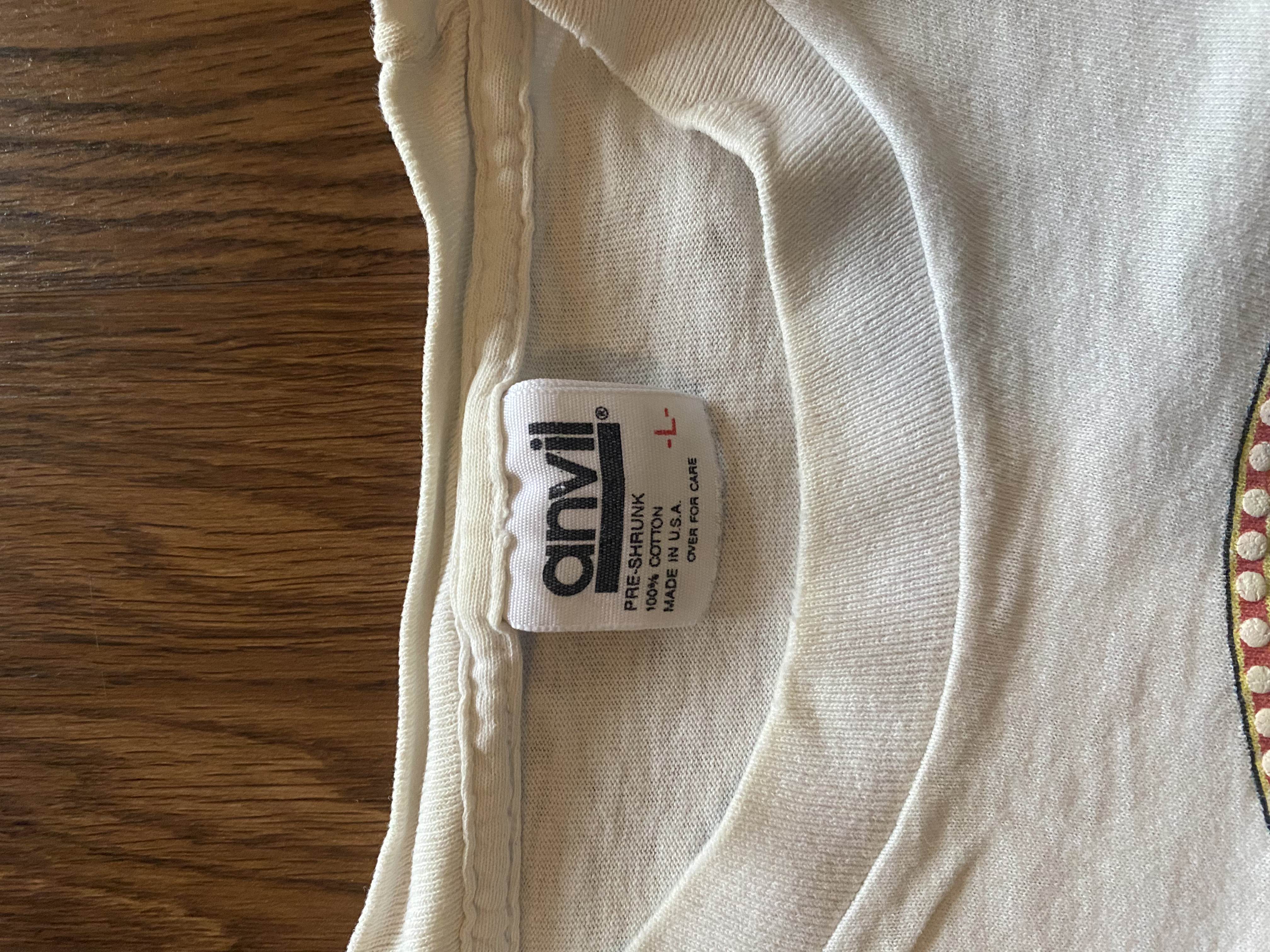
Anvil red bar Made in USA tag — Grateful Dead Las Vegas 1991
From TT-000018 — Grateful Dead Las Vegas 1991
How to Identify This Variant
Tag Design
"anvil" in lowercase sans-serif, a solid red horizontal bar directly below the logo — the defining mark of domestic Anvil production. White tag, clean layout, size in red type.
Made In
Made in U.S.A. — all red bar domestic examples confirm American production. The red bar itself became so associated with the domestic tag that collectors use it as a dating shorthand.
Construction
Single stitch on most domestic examples — consistent with Anvil's standard US production through the early 90s. The Telluride Dead tee (TT-000069) is the primary reference.
RN Number
RN 38619 — Anvil's registered number, appears on care labels across all three variants. Confirms Anvil attribution on any example where the neck tag is damaged or missing.
Era Window
Late 80s through mid-90s for domestic production. Archive examples span 1990 (Dead Telluride) through mid-90s (Black Hills pronghorn, Snow Leopard).

The red bar tag is Anvil's most recognizable mark and the one collectors reach for when dating a piece. It reads instantly — the horizontal red stripe below the logo is distinctive enough that you can identify it across a rack without pulling the shirt. Domestic Anvil in this configuration was the concert merch printer's mid-tier blank: heavier than commodity stock, cheaper than Hanes Beefy-T, with a reliable print surface and consistent sizing.

Four archive entries carry this tag across a range of subjects — the Grateful Dead Las Vegas 1991 official GDM piece (TT-000018), the Grateful Dead Telluride ski tee signed by B. Templeton (TT-000069), the Black Hills pronghorn souvenir (TT-000025), and the Snow Leopard long sleeve nature tee (TT-000056). The range confirms what printers knew: the red bar Anvil was a general-purpose blank that worked for everything from official licensed merch to anonymous souvenir printing.

02
Red Bar — Assembled in Honduras of U.S.A. Fabric
Late 90s — Early 2000s · Transitional Production
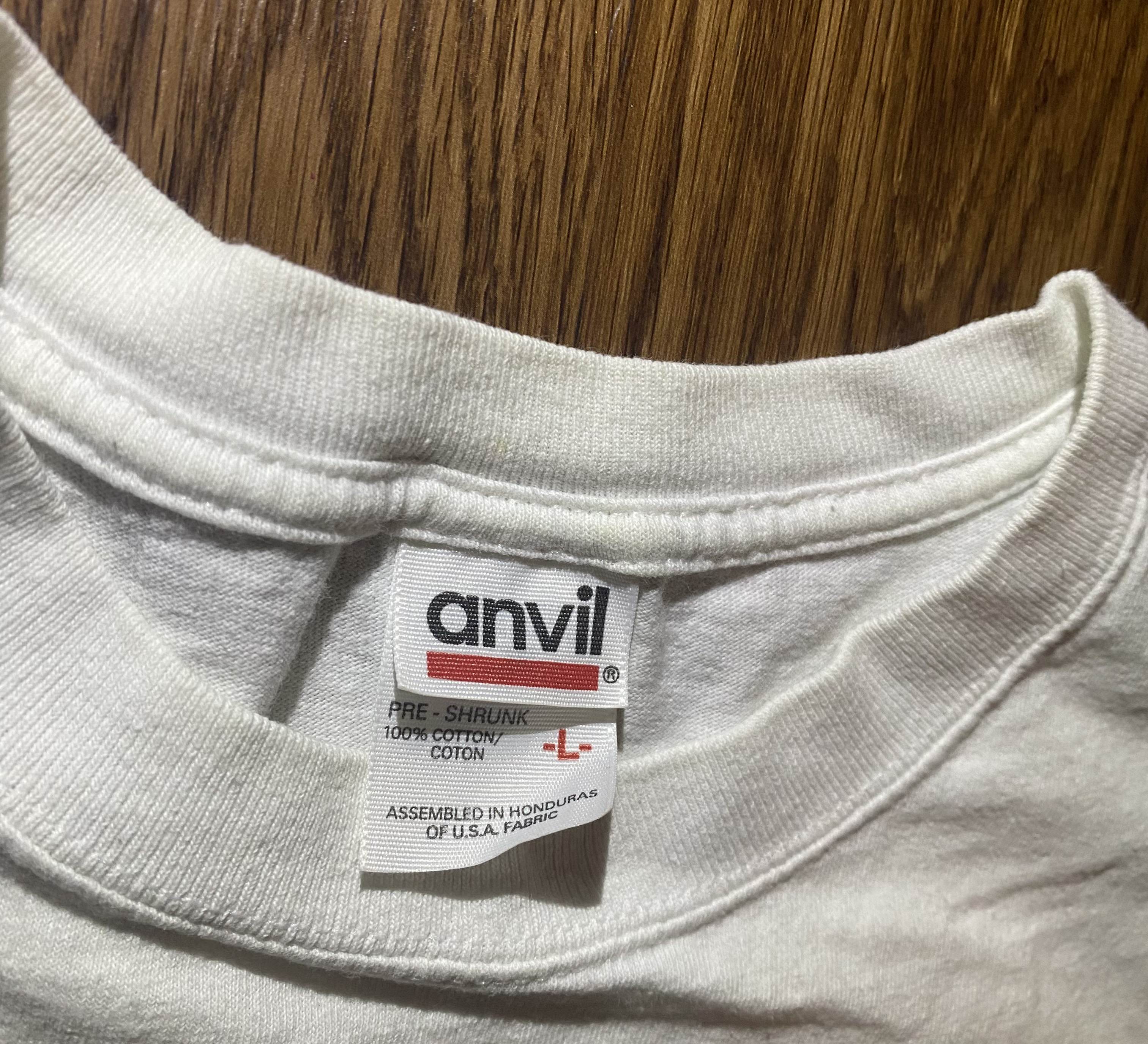
Anvil red bar Honduras assembly tag — Rolling Stones Forty Licks 2002
From TT-000070 — Rolling Stones Forty Licks Tour 2002/03
How to Identify This Variant
Tag Design
Same red bar layout as the domestic variant — "anvil" logotype, red horizontal bar, white tag. The key difference is in the origin language below the size.
Origin Text
"Assembled in Honduras of U.S.A. Fabric" — the critical phrase. Same visual tag as domestic, different manufacturing geography. Easy to miss if you're not reading carefully.
Construction
Double stitch on the archive example — a shift from the single stitch of domestic red bar production. Check the sleeve seam to distinguish from the domestic variant without reading the tag.
Era Window
Late 90s into the early 2000s — the transitional period when Anvil maintained the red bar tag design while shifting assembly offshore, consistent with industry-wide patterns at the time.
Key Tell
Read the origin line. The red bar looks identical to the domestic tag at a glance — only the "Honduras" text distinguishes it. Double stitch is a secondary confirm.

The transitional red bar variant is the most commonly misidentified Anvil tag in the wild. The visual design is identical to the domestic version — same logo, same red bar, same white tag — and collectors who aren't reading carefully will date it as a domestic piece. The "Assembled in Honduras of U.S.A. Fabric" text is the only distinguishing feature on the neck tag itself, with the double stitch construction as a secondary tell.

This phrasing mirrors the transitional language used by Oneita ("Made in USA / Sewn in Jamaica"), Delta Pro Weight ("Knit in U.S.A. / Assembled in Honduras"), and other blanks of the same era — a reflection of the Caribbean Basin Initiative's effect on the American garment industry. Fabric continued to be sourced domestically while assembly moved offshore, and the tag language was required to reflect that distinction. The archive example is the Rolling Stones Forty Licks Tour 2002/03 tee (TT-000070), placing this variant squarely in the early 2000s.

03
Blue Tear-Away — Honduras
Early 2000s · Offshore Production
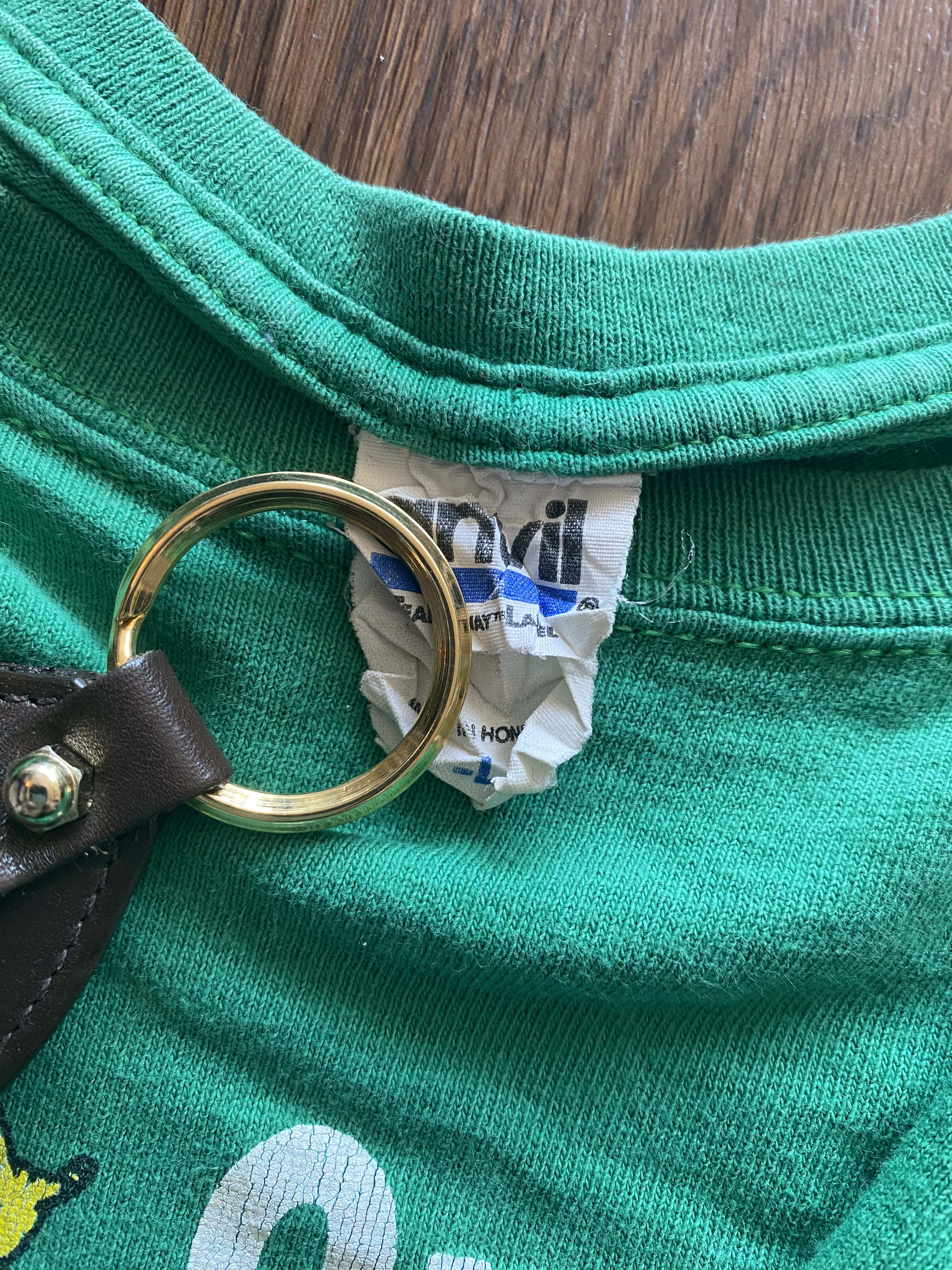
Anvil blue tear-away Honduras tag — Reel Big Fish 2000s
From TT-000060 — Reel Big Fish, One Fish Two Fish Parody, 2000s
How to Identify This Variant
Tag Design
Blue branded tag — a complete departure from the white red bar layout. Tear-away construction, blue background with white "anvil" logotype. No red bar. Immediately distinguishable from both earlier variants.
Made In
Honduras — fully offshore production, no "U.S.A. Fabric" qualifier. The blue tag marks Anvil's complete transition away from domestic manufacturing.
Construction
Double stitch — consistent with all Honduras-production Anvil examples. The tear-away tag itself leaves a small seam remnant when removed, visible on worn examples.
Era Window
Early 2000s onward — the blue tear-away appears after the red bar transitional period. The Reel Big Fish example dates to the mid-2000s based on the band's activity and the blank's timeline.
Key Tell
The blue tag is unmistakable — you can't confuse it with the domestic or transitional red bar variants. If it's blue, it's post-transition, it's Honduras, and it's 2000s or later.

The blue tear-away tag represents Anvil's full offshore transition — a new design language that abandoned the red bar entirely and signaled the end of the domestic production era. Where the red bar (even in its Honduras assembly variant) maintained visual continuity with the brand's domestic history, the blue tag was a clean break. Different color, different construction, different geography.

Tear-away tags became common across the blank industry in the early 2000s as brands responded to consumer preference for tagless comfort — the perforated tag tears out cleanly, leaving the neck seam free of irritation. The Reel Big Fish example (TT-000060) is a Dr. Seuss parody print from this period, a band tee that landed on the blue tear-away Anvil the same way the Dead had landed on the red bar fifteen years earlier: because it was what was available, it printed well, and the price was right.

Historical Context
The Mid-Tier Blank

Anvil Knitwear was founded in 1971 in New York City, positioning itself deliberately between the commodity blank market (cheap, inconsistent) and the premium market (Hanes, Fruit of the Loom). The red bar tag was part of that positioning — a clean, recognizable mark that communicated quality without the price premium of the major brands.

Through the 1980s and into the 90s, Anvil became a standard blank for the concert merchandise and souvenir printing markets. GDM — Grateful Dead Merchandising — used Anvil for official tour merchandise across multiple years. The Dead Telluride ski tee (TT-000069) and the Las Vegas 1991 show tee (TT-000018) are both on domestic red bar Anvil, placed there by printers who trusted the blank's weight, print surface, and consistency.

The offshore transition followed the same industry trajectory as every other domestic blank manufacturer. The Caribbean Basin Initiative made Honduras assembly economically competitive. Fabric continued to be sourced domestically for a transitional period — reflected in the "Assembled in Honduras of U.S.A. Fabric" language — before full offshore production took over and the blue tear-away tag replaced the red bar entirely.

Anvil was acquired by Gildan in 2012, ending its independent operation. The brand still exists as a Gildan sub-label. The red bar does not.
Timeline
Anvil by Era
1971
Anvil Knitwear founded, New York City
Mid-tier blank positioned between commodity and premium markets. Red bar tag introduced as the brand's primary identity mark.
Late 80s
Red bar domestic production peak
Anvil established as a concert merch and souvenir printer staple. GDM and other major licensed merch operations use the blank regularly. Made in USA, single stitch.
Early 90s
Peak domestic era — red bar at its most prevalent
The blank of record for a significant slice of the early 90s concert and souvenir market. RN 38619 on all domestic examples.
Late 90s
Transitional red bar — Honduras assembly begins
"Assembled in Honduras of U.S.A. Fabric" language appears. Tag design unchanged. Double stitch replaces single. Easy to misdate without reading the origin line.
Early 2000s
Blue tear-away tag introduced
Full offshore transition. Red bar retired. Blue branded tear-away tag marks the end of the domestic era. Honduras production standard.
2012
Anvil acquired by Gildan
Independent operation ends. Brand continues as a Gildan sub-label. The red bar — domestic or transitional — exits the market permanently.
Archive Entries
← Back to Tag Database Browse Archive →